
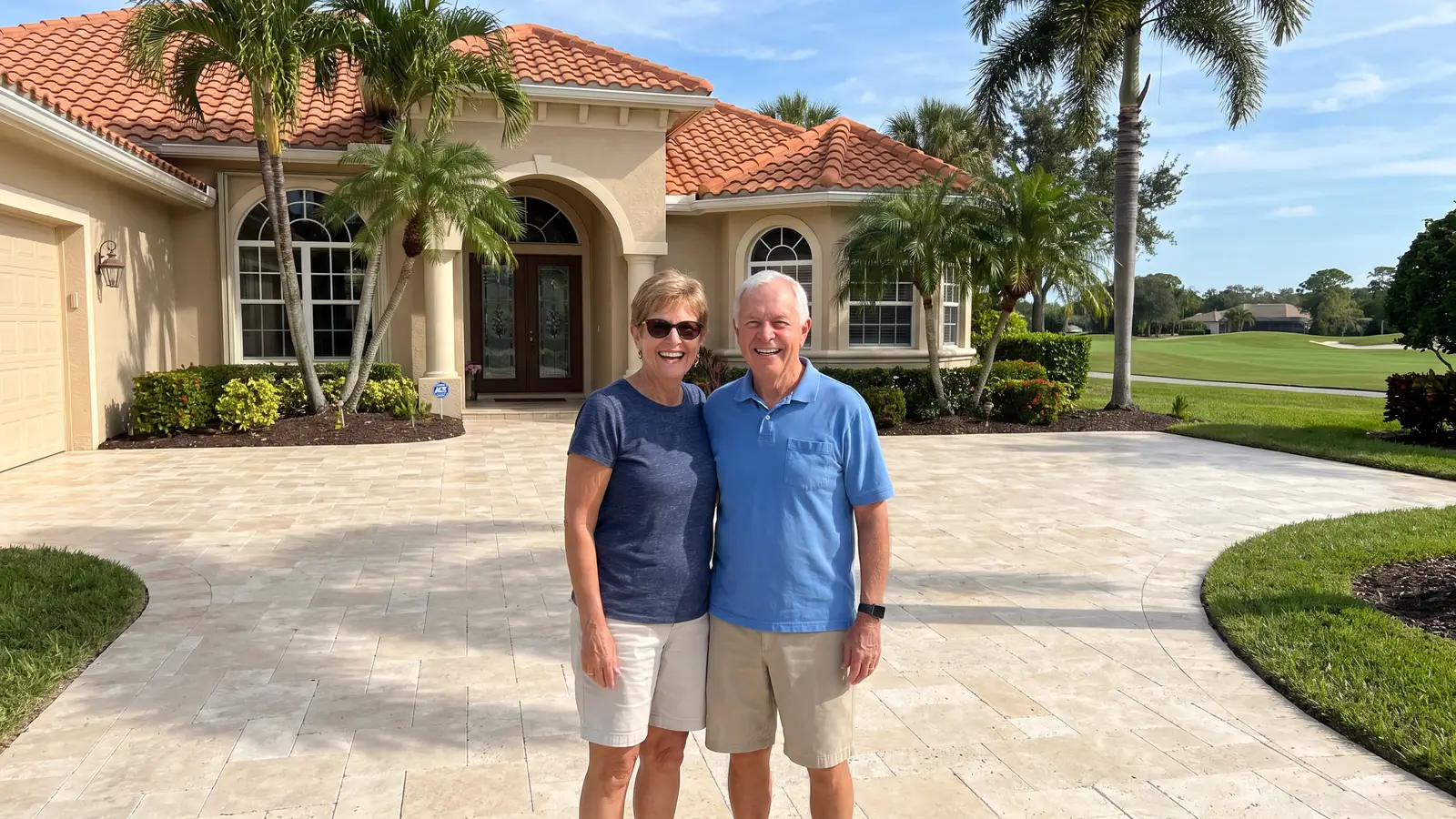
Paver sealing for Arlington homes
Paver Sealing in Arlington, FL
More than 50,000 people moved to Arlington by 1961, so call (904) 849-6284 to ask what your older pavers need.
- Brings out deeper paver color
- Fresh joint sand helps lock pavers in place
- Gives weeds less room to grow
- Makes the surface easier to keep clean
- Free estimate, no obligation
Request a Free Estimate
Free, no obligation.
Fast, careful paver sealing in Arlington
Arlington homeowners can book paver sealing with a free estimate, whether the driveway belongs to a 1950s brick ranch or a newer pool home. A local contractor washes, re-sands and seals driveways, walkways and pool decks. After you call (904) 849-6284, a reply should come inside 1 business day, and often much faster.
Think of a long driveway that has faded to a flat gray, with weeds in the seams and brown streaks near the garage. After a wash, new sand and a fresh coat, the pavers go back to one even tone. Ready for a price? You can ask for your free estimate and describe the driveway.
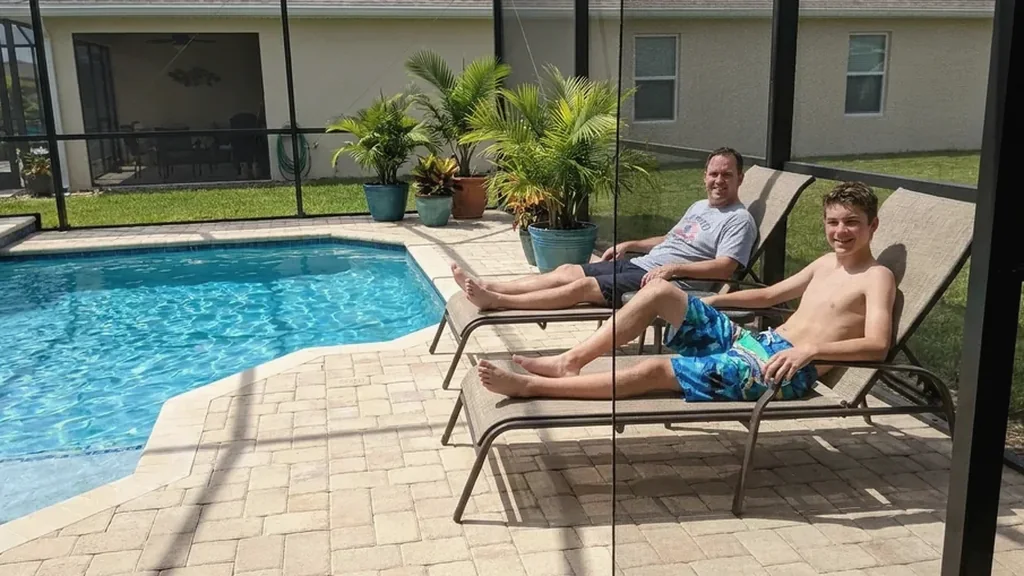
Why hire a local paver sealing contractor in Arlington?
Arlington owners often hire a local paver contractor because the area filled with homes in waves. Pavers were added to those homes over seven decades. To hear what that means for your driveway, ask for your free estimate.
A free look at the driveway
The contractor checks your Arlington pavers, joints and drainage at no charge. A price comes before anything is agreed.
A range for comparing bids
First Coast companies commonly publish $1.75 to $3.25 per square foot to clean, sand and seal. Weigh any Arlington quote against it.
Honest about the old coat
Many Arlington pavers have had several owners. The contractor identifies the old sealer before choosing a new one, so the two coats do not clash.
You set the schedule
You choose the finish, the date and whether to go ahead. An Arlington estimate carries no obligation.
Get Your Free Estimate in Arlington
Tell us about your pavers in Arlington.
Free, no obligation
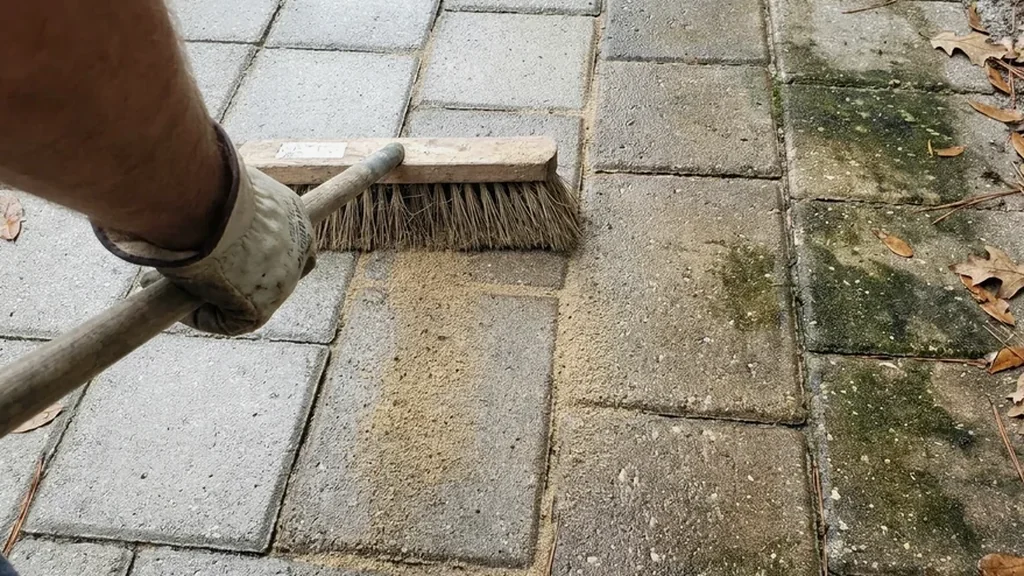
What paver problems show up most in Arlington?
Sand that was dune land
Regency Square Mall opened in 1967 on a stretch of sand dunes. The Jacksonville Arboretum sits on land strip-mined from 1941 to 1961, which left barren white sand. The USDA describes a deep sand first mapped near St. Johns Bluff Road, the Ortega series, as having rapid permeability. Joint sand drains and washes out easily on ground like that, and a coat that locks the joints helps hold it. If your sand keeps disappearing, that is the sign to look at the base and the slope as well as the sealer.
Long drives and pool decks in full sun
In Safe Touch's description, Arlington means ranch homes with long drives, fences and pool decks. It says two to three years between coats is typical, shortened by full sun, pool chlorine and summer storms. A long drive means more square feet to seal and more sun on every foot of it. Color fades first on the open stretch near the street. Ask the contractor to look at the whole length, not just the apron by the garage.
Pavers with a long list of owners
About 44 percent of occupied homes in ZIP 32211 are renter occupied, and Arlingwood has homes built from 1953 to 2025. Pavers added over that span rarely come with records. A solvent-based coat already on the pavers rules out a water-based sealer on top. The contractor needs to test what is already on the surface before choosing what goes next. Share any receipts or names you have, even if the work was done before you moved in.
Creek water and street flooding
Pottsburg Creek is fed by rainwater, retention ponds and storm drains, so its level swings hard. In 2022, homeowners on Woolery Drive in Arlington Hills described street flooding that had lasted at least a year. Pavers near low spots can hold a film of silt after water leaves. Sealer needs a dry, clean surface, so that film comes off first. If water crosses your drive in a big storm, point out the path at the first visit.
Roots and shade under old oaks
The arboretum's Live Oak Trail has many oaks over a century old, and Tree Hill has a 300-year-old oak. Safe Touch notes that drives and walks under a live-oak canopy pick up brown water stains. A Jacksonville paver sealing company adds that roots which lift a section need repair before sealing. Shaded pavers also stay damp longer, and that slows every step. A green film can return fast if the shade stays heavy.
Does paver sealing differ between Lake Lucina and the newer Arlington streets?
Mostly the steps stay the same, but the pavers differ in age. The homes at Lake Lucina date from 1951 to 1962, and the median build year is 1955. Arlingwood is mostly brick ranch homes with a median year of 1961, and River Forest has ranch homes of roughly 800 to 1,600 square feet. When you ask for your free estimate, say which area you live in so the contractor can guess the age of what is there.
Along the river, Clifton and Monterey sit on a mature route between the Arlington River and Mill Cove, with tall trees close to the houses. The Ocean Grove Association bought the Clifton area in 1873. Arlington Lions Club Park, on the St. Johns, has a boat ramp that opened in 1989. If your pavers are near the river, call (904) 849-6284 and mention it.
Newer pockets run through the rest of the area, with pavers laid in later decades. Sandalwood began developing in spring 1960, Regency Square opened in 1967 and the Dames Point Bridge was built from 1985 to 1989. Jacksonville University bought land here in 1947 and finished its first building in 1950. Whatever the decade of your street, ask for your free estimate and describe the driveway, the walk and any pool deck.
Older roots show up too. Crossroads sits at University Boulevard and Arlington Road, and University Boulevard was called Chaseville Road before 1959. Chaseville had a post office by 1876, the first in Old Arlington. Pavers near those old crossroads may be newer than the lots, so ask for your free estimate and tell the contractor the street.
What does paver sealing cost in Arlington?
First Coast companies commonly post $1.75 to $3.25 per square foot for cleaning, sanding and sealing pavers. A Jacksonville guide says larger projects earn a better per-square-foot rate while smaller ones cost more. A long Arlington driveway can land on the kinder side of that. To price your own, ask for your free estimate, and the estimate is free.
Starting condition drives the cost, since a Jacksonville company reports about 2 to 3 hours of prep for every hour of sealing. Gates, fences, stairs and tight side yards add minutes. A failed old coat that must be stripped first raises the price. Call (904) 849-6284 and ask which of these fit your lot.
| Paved area | Typical example | Clean, sand and seal |
|---|---|---|
| 300 sq ft | Small patio or walkway | $525 to $975 |
| 600 sq ft | Two car driveway | $1,050 to $1,950 |
| 1,000 sq ft | Large driveway or pool deck | $1,750 to $3,250 |
| 1,500 sq ft | Driveway plus pool deck | $2,625 to $4,875 |
Math based on the $1.75 to $3.25 per square foot that Northeast Florida paver companies published as of November 2026. Your contractor sets the actual price after seeing the surface. Repairs, leveling and stripping failed sealer are usually extra.
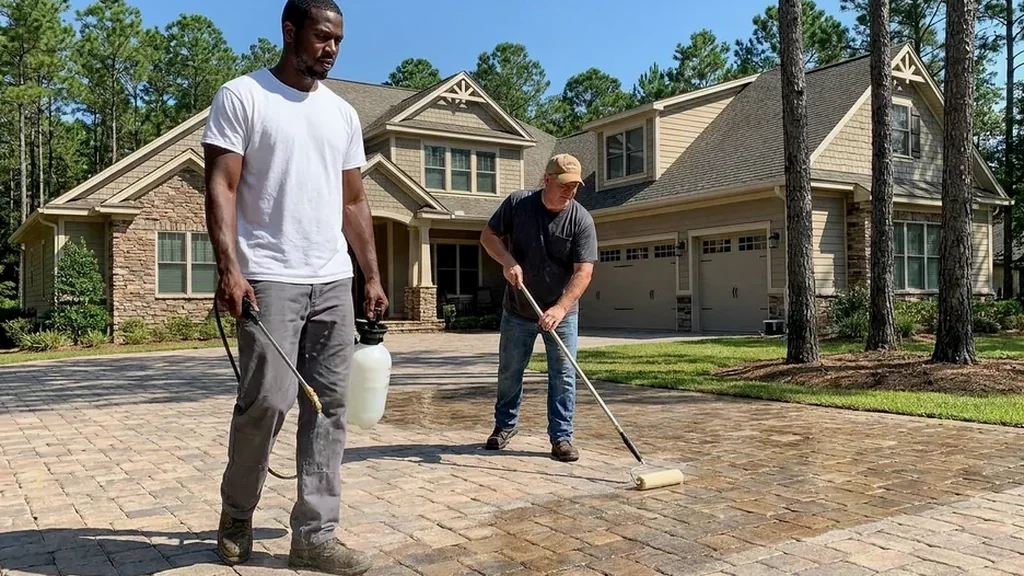
How does a paver sealing job work in Arlington?
Inspect the driveway, walk and deck
A visit begins with a lap around every paved surface, checking for dips, shifted sections and thin joints. A paver maker says a weak or poorly compacted base is a leading cause of sinking. Sealer would only preserve a dip, so repairs are sorted before any product opens. The existing coat is identified in the same walk.
Pressure-clean the stains and growth
Oil, brown tannin marks, rust from irrigation water and green film in the shade all get treated in this stage. Deep stains can stay faint, and a good contractor tells you up front. Landscape beds and fence lines are kept clear of the rinse, so shrubs and wood are not soaked. The wash also lifts sand out of the seams.
Top the joints up with sand
On sandy ground like this, old joint sand may be thin or missing. Heavy summer rain flushes it from unsealed joints, so weeds root and pavers shift. Fresh sand fills each seam, and the surface is swept clean. Full joints are what the coat bonds to, and they keep ants and weeds from moving in along the edges.
Allow a full dry-out
Dry pavers come first, since sealer needs a dry surface. Jacksonville gets most of its rain from May to September, and a Jacksonville company names fall and spring as good seasons to seal. Shaded stretches by fences stay wet longer than open ones. Sealing damp pavers is how cloudy coats happen, and a cloudy coat has to be stripped and redone, which doubles the work.
Apply the finish you picked
The coat goes on with a sprayer and a back-roll, which covers evenly and works into the joints. Wet look deepens color and matte leaves the natural look. A company notes that drive surfaces wear faster than patios. Sprinkle water on the surface later: beading means the coat still works.
Complete paver services in Arlington
Here is the order at an Arlington home: look, wash, re-sand, dry, seal. Nothing dirty gets sealed in, because the coat comes last. Long drives mean long washes, and big decks add drying time. Call (904) 849-6284 to ask how long your job would take.
Daily tires and sprinkler spray hit the driveway. Sun, chlorine and chairs hit the pool deck. Walks along fences stay shaded and damp. Each surface wears its own way, so the plan fits each one, and you can ask for your free estimate to describe yours.
Which sealer goes on depends on the old coat, because a water-based product cannot go over a solvent-based one. The finish is separate: wet look or matte. One company says film-forming sealers are redone every 3 to 5 years and penetrating ones last about 5 to 7. Call (904) 849-6284 to compare.
Weather sets the calendar. Rain from May to September can move a date. New pavers wait 30 to 60 days for a first coat, and cars stay off about a day afterward. For a date that fits your driveway, ask for your free estimate.
Questions to ask before you hire
- Does someone need to be home while you work, or only for the final walkthrough?
- How long should pavers that went in last year wait before they are sealed?
- If ants dig sand out of the joints later, is that something you would come back for?
- Is the joint sand you use the kind that hardens, and how long must it stay dry?
- Can you tell by looking whether the old sealer has to be stripped before the new coat goes on?
- What should I move off the driveway and patio before you arrive?
- What will your estimate list, line by line, so I can compare it with other quotes?
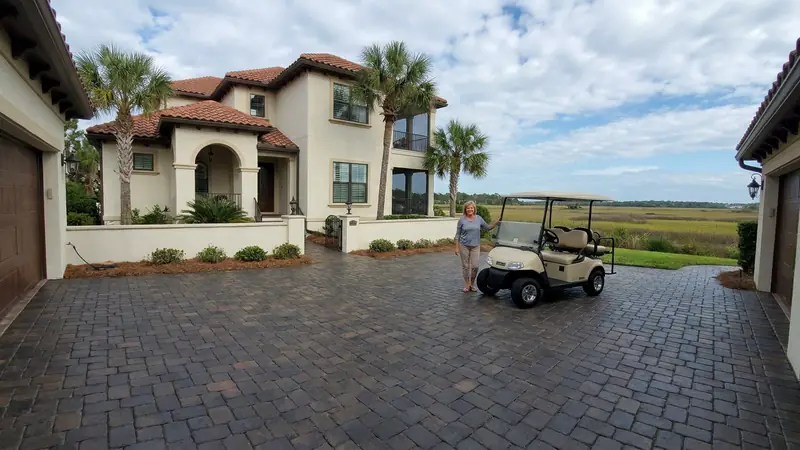
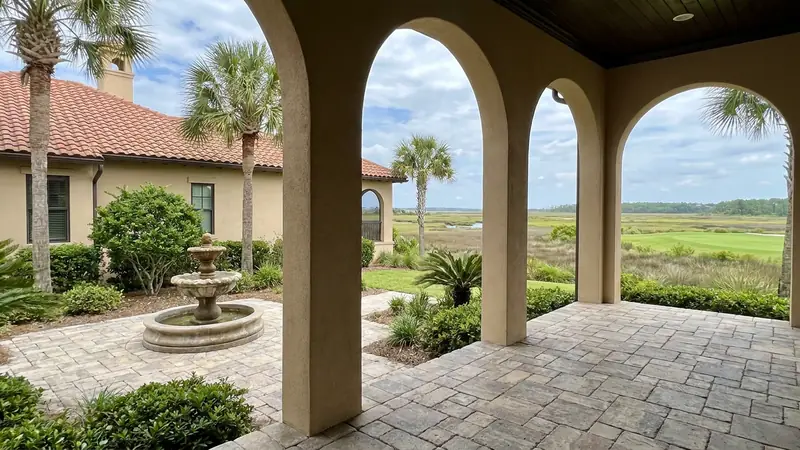
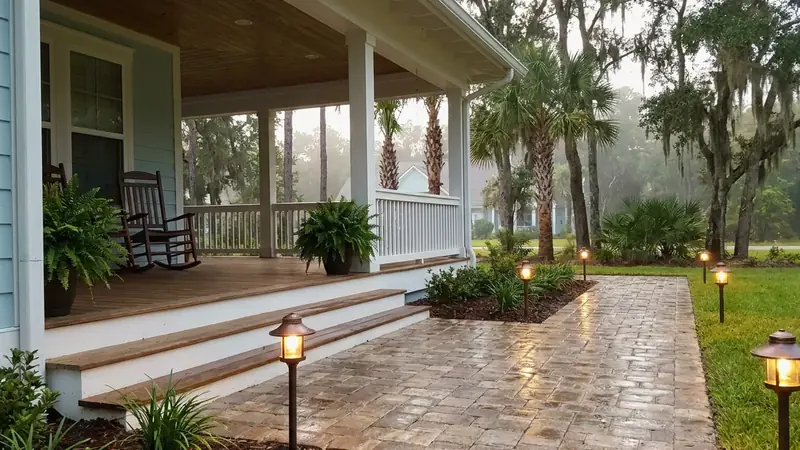
What do sealed pavers look like around Arlington?
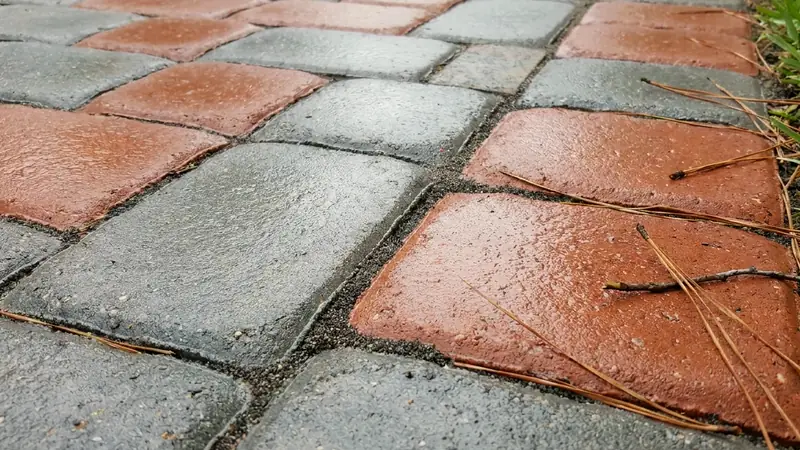
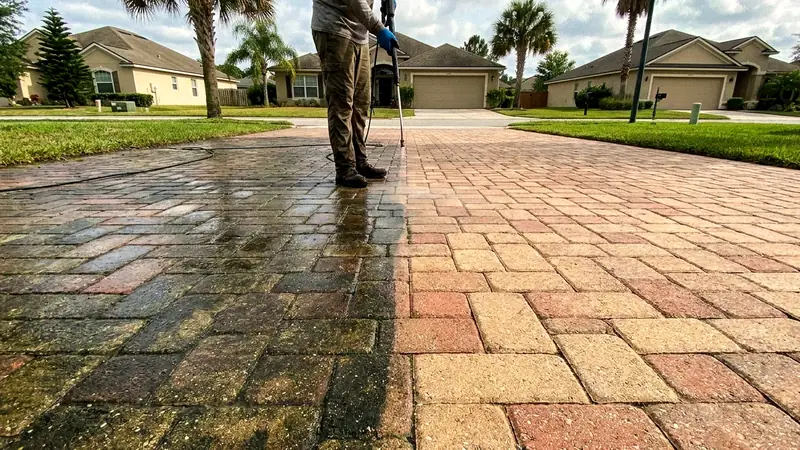
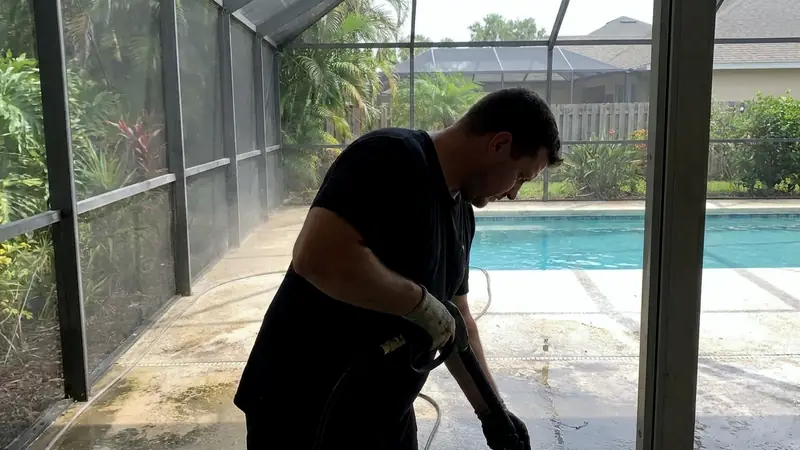
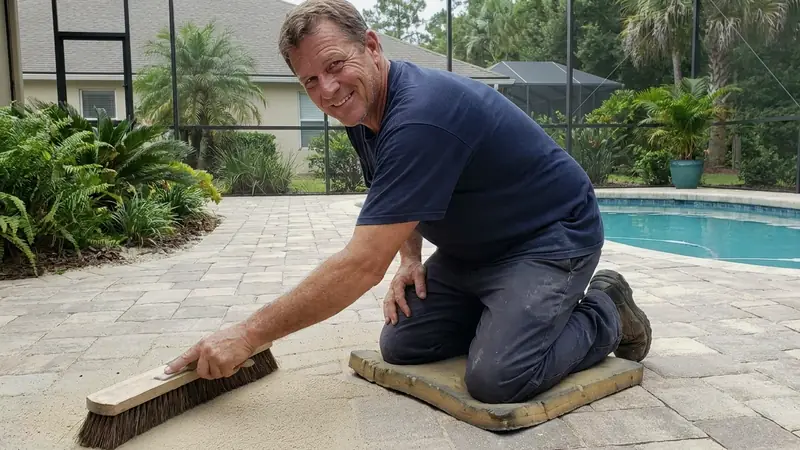
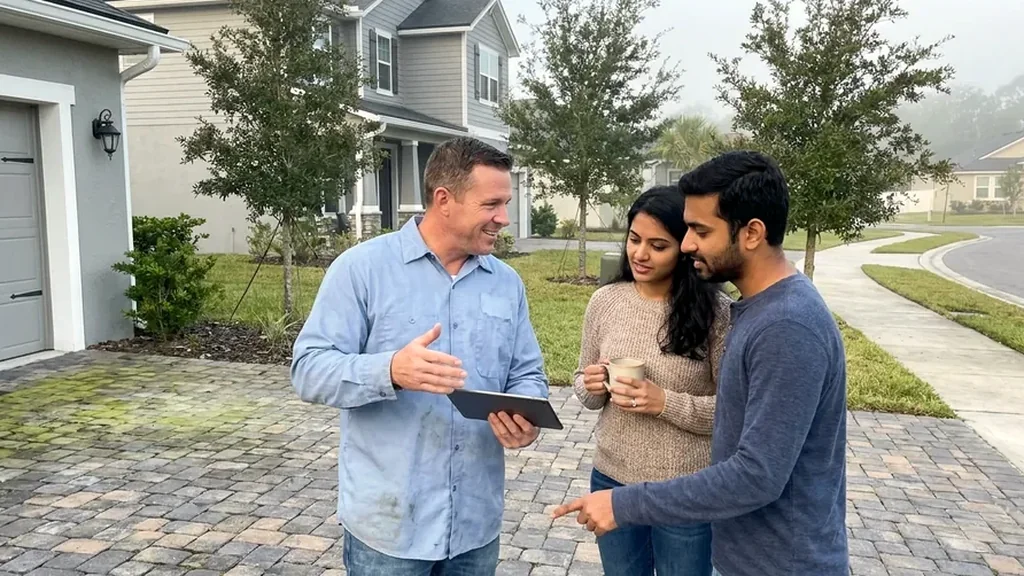
Why local matters in Arlington
Arlington is wide and spans many decades, which a local contractor keeps in mind from the first call. A 1950s ranch and a 1980s pool home need different plans, because the pavers, the base and the coat differ. Someone new to the area may treat them alike. To reach a contractor who works Lake Lucina, Arlingwood and the river streets, call (904) 849-6284.
Ground and water matter here too. Sandy soil drains fast, and Pottsburg Creek swings with every storm, so a local contractor asks about low spots and recent rain. Use ask for your free estimate to ask what a wet week does to the schedule.
About 44 percent of occupied homes in Arlington's main ZIP are rented, and owners and tenants often want different things. A landlord may want a durable, low-fuss coat, while a family wants the front to look sharp. A local contractor can talk through both. If that is your situation, ask for your free estimate and describe it.
Fences, gates and shared drives are common on Arlington lots, and a local contractor plans the truck and hoses around them. Safe Touch describes the area as ranch homes, long drives, fences and pool decks. That mix means a plan for the whole property, covering the front and the back. Call (904) 849-6284 and describe your layout.
How did Arlington grow into the area it is today?
Arlington grew faster than any other part of Jacksonville for two decades after the Mathews Bridge opened in 1953. H. Terry Parker started buying land around 1943 and gave thirty acres for what is now Terry Parker High School. If your home is from that boom, ask for your free estimate and name your street.
Atlantic Boulevard was finished in 1910 and runs from San Marco through Arlington toward the beaches, and it was first only 18 feet wide. Craig Municipal Airport was built during World War II, and the Blue Angels held their first air show there on June 15, 1946. Arlington joined Jacksonville in the 1968 consolidation. Near any of these Arlington landmarks, call (904) 849-6284.
Green space tells the rest of the story. Tree Hill Nature Center opened as a city park in 1971, and its hill is described as Duval County's second-highest point at 36 feet. The Jacksonville Arboretum sits on land strip-mined from 1941 to 1961, and Jacksonville University's 260-acre campus has stood here since 1950. Near any of them, ask for your free estimate and say which street you are on.
Frequently Asked Questions
What is the average cost to seal pavers in Arlington?
Budget $1.75 to $3.25 per square foot, the First Coast range companies list for cleaning, sanding and sealing. A failed old coat that must be stripped first raises the price. A long driveway adds up in total even when the per-foot rate is fair.
Why does paver sealing cost what it does in Arlington?
Prep is where the time goes. For each hour of sealing, a Jacksonville company reports 2 to 3 hours of prep work. Washing, new joint sand, stain treatment and access all add up, and a long Arlington driveway multiplies each of them. Reading the quote line by line shows where the hours went. Ask for a quote that lists each step and the square footage, so two bids can be set side by side.
How long does paver sealing last for an Arlington home?
Recoat timing is usually two to five years, based on what companies quote. Safe Touch says two to three years is typical in full sun with chlorine and storms. One Jacksonville company says film-forming sealers are redone every 3 to 5 years and penetrating ones last roughly 5 to 7.
Do Arlington's ranch homes and long driveways cost more to seal?
The per-foot rate does not change, but the total can. A Jacksonville guide says larger projects earn a better rate per square foot, while small ones cost more per foot. A long driveway also means more washing, more sand and a longer wait before cars can return, so the quote should show the square footage.
Is it good to seal pavers in Arlington?
For most homeowners it is, since sealer keeps oil, dirt and stains from soaking in. Safe Touch says it also keeps the next season from locking in brown oak stains. The surface still has to be clean and dry first.
Should I seal my Arlington pavers before selling the house?
Many owners do. A Jacksonville pressure washing company says homeowners planning to sell within two years often book a full hardscape seal as pre-listing prep. Clean, even pavers photograph well and read as upkeep. Ask for the date to land before the listing photos are taken.
Is a water-based sealer a good choice for Arlington pavers?
That depends on what is already there, because water-based sealer cannot go over solvent-based sealer. Wet look sealer deepens the color, while matte leaves the natural look alone. Ask the contractor for the product name and write it down for next time.
Can sealing level out a sunken Arlington driveway?
Not on its own. Sealing locks in whatever is there, so sinking or shifted areas are reset on a rebuilt base first. The number one reason pavers fail is sinking and washouts, one Jacksonville company says. Show the contractor the dips on day one, and mention where you park, since turning tires loosen sand and let pavers settle.
When is it safe to seal newly installed pavers in Arlington?
Give them a month or two. A Jacksonville company suggests 30 to 60 days after the install so efflorescence, the chalky white bloom, can come out first. Your installer can confirm the date the work wrapped up.
When can I park on a newly sealed Arlington driveway?
Plan on about a day. A Jacksonville company gives 2 to 4 hours before anyone walks on sealant and 24 hours before vehicles drive on it. A wet or humid morning can stretch that, so ask what the plan is for your day.
Why did sealer turn white on my Arlington pavers?
Most of the time it was applied to damp pavers or laid on too thick, a Jacksonville company says. Milky sealer means trapped moisture and often has to be stripped and redone. Ask any contractor how they confirm the surface is dry before they start.
What are the signs an Arlington driveway needs another coat?
Sprinkle water on them. If it beads, the sealer is still working, and if it soaks in and darkens the pavers, the coat is done, one Jacksonville company says. Faded color and thin joint sand are other signs, along with weeds or ants in the seams. Sunny driveways show the change first.
Nearby areas we serve
Ready for a Free Estimate in Arlington?
Call (904) 849-6284 and tell us about your pavers.
Free, no obligation