
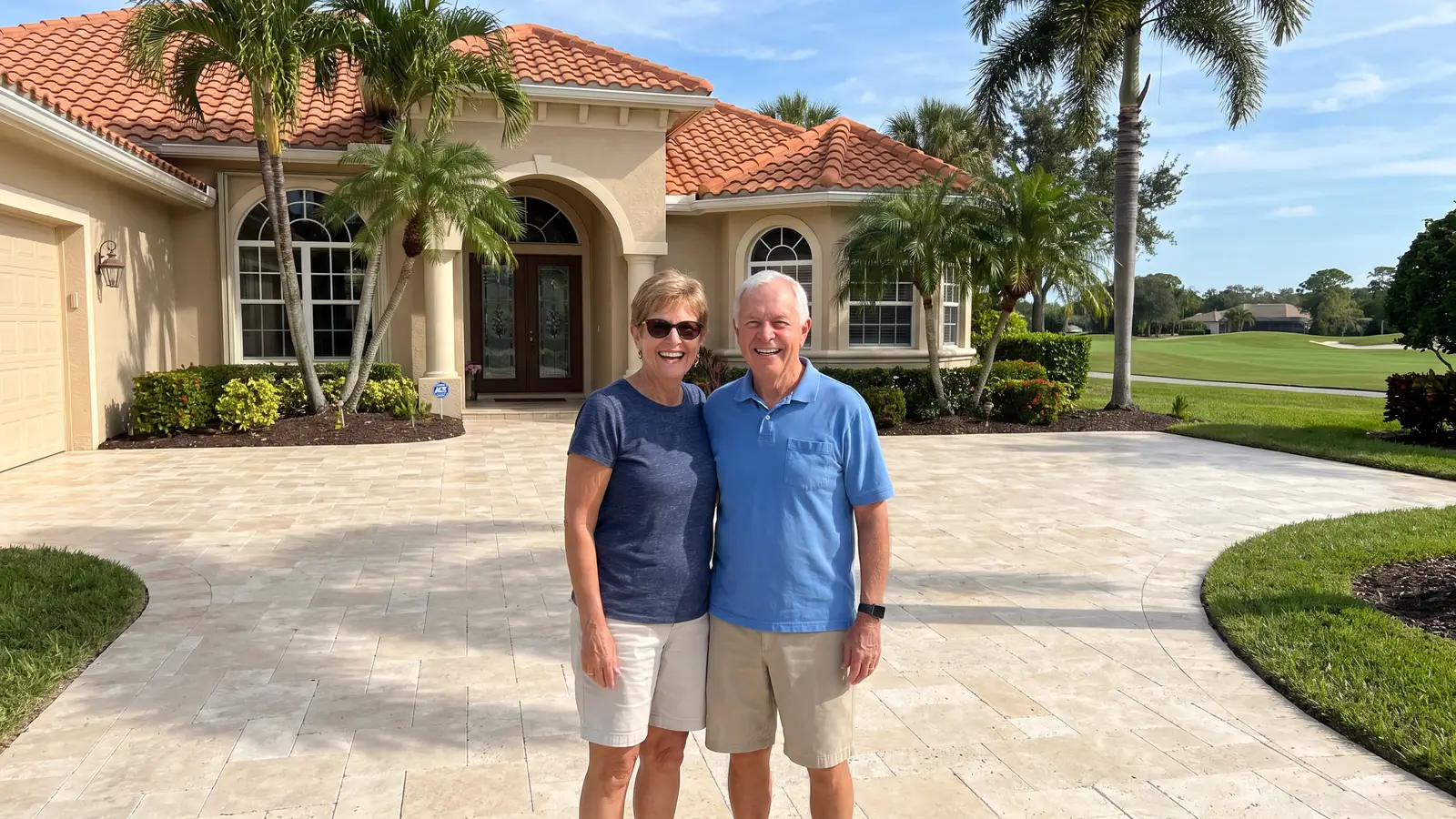
Paver sealing for San Jose homes
Paver Sealing in San Jose, FL
Between University Boulevard and San Clerc Road, San Jose pavers can be sealed; call (904) 849-6284 for a free estimate.
- Brings out deeper paver color
- Fresh joint sand helps lock pavers in place
- Gives weeds less room to grow
- Makes the surface easier to keep clean
- Free estimate, no obligation
Request a Free Estimate
Free, no obligation.
Fast, careful paver sealing in San Jose
Paver sealing in San Jose is open to homeowners on both sides of San Jose Boulevard. The estimate is free, and a reply comes within 1 business day, usually much sooner, so you are not left waiting. A local contractor cleans the pavers, then refills the joints and seals your driveway, patio or walkway. To start, ask for your free estimate.
Think of a patio walk that runs under a big oak in a San Jose yard. Acorn husks and leaf stains have dulled it, and a green edge shows where the shade stays damp. A wash, new sand and a fresh coat bring the original color back. If you would rather talk it over, call (904) 849-6284.
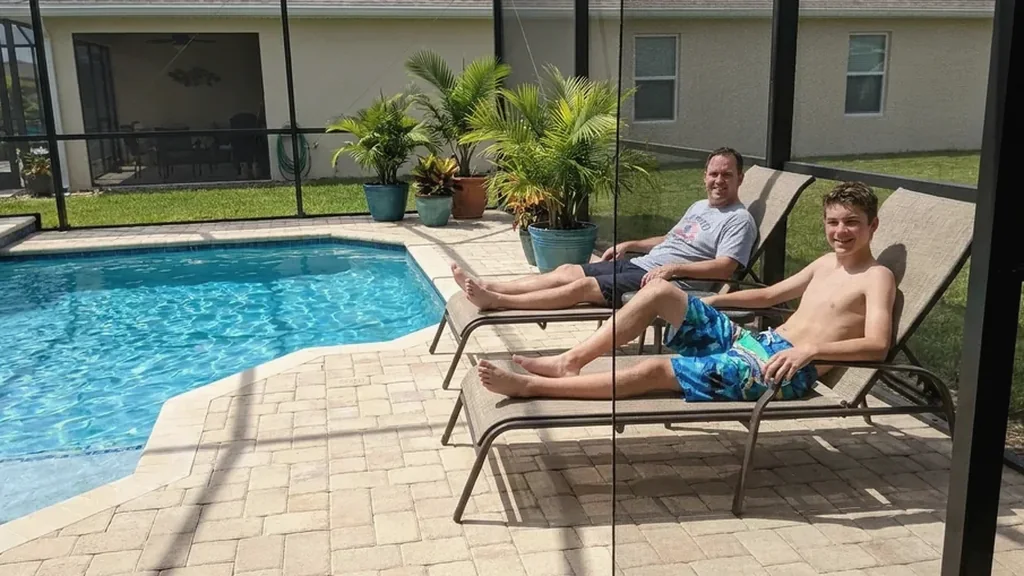
Why hire a local paver sealing contractor in San Jose?
San Jose homeowners go with a local contractor since oaks, creeks and older lots each shape the work. To hear how that fits your street, ask for your free estimate.
A free look first
The contractor looks at your San Jose pavers at no charge and gives a price before you commit to anything.
A range to compare
Around Northeast Florida, a full clean, sand and seal is published at $1.75 to $3.25 a square foot. Weigh any San Jose bid against that.
Choose your finish
Wet look gives deeper color, and matte keeps the pavers looking natural. Pick the one that sits well beside your San Jose home's walls and trim.
No obligation
You set the date and decide whether to go ahead. A San Jose estimate is free and carries no obligation.
Get Your Free Estimate in San Jose
Tell us about your pavers in San Jose.
Free, no obligation
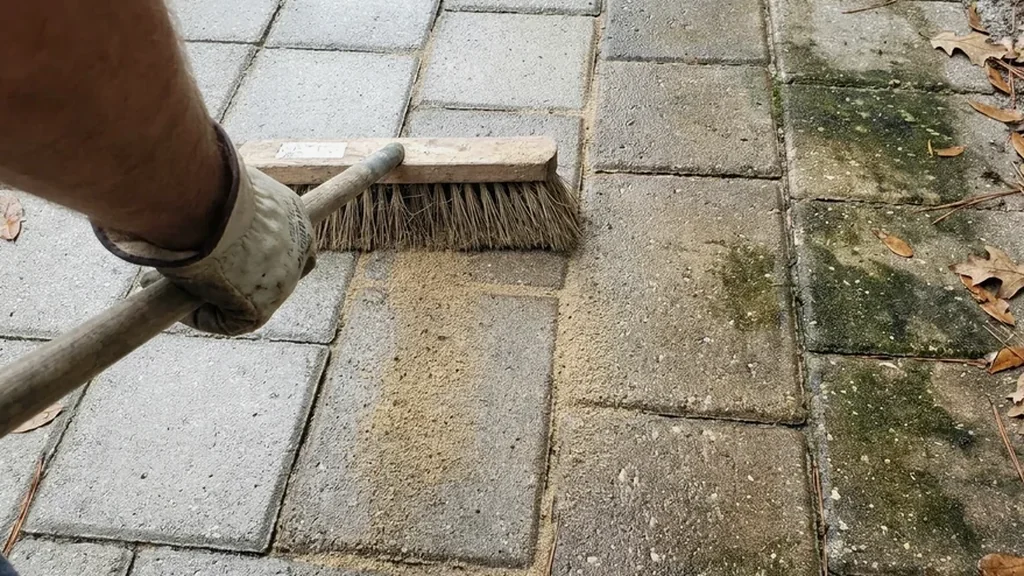
What paver problems show up most in San Jose?
Green growth where the oaks keep shade
Wikipedia says most San Jose homes have grassy front lawns with beds, shaded by large oaks with draping moss. Green algae grows in shaded areas where there is moisture, such as under trees or patio roofs. Goodbys Creek roughly divides San Jose and Mandarin, so many yards sit close to water as well as shade. A walkway that sees little sun can stay damp for a long time, which means the green comes back first there. A front walk is often the first place to look for it. The wash goes after that green edge before any sealer goes down.
Water that sits after a heavy storm
Jacksonville gets about 52 inches of rain a year, mostly May to September, often in short, hard downpours. The USDA's Ortega soil series, typed in Duval County, is moderately well drained sand, and its water table can rise above 48 inches for about 1 to 10 days after heavy rain. That is county-level, not a survey of one lot, but it shows why sandy ground can still hold water for days. If your San Jose patio stays wet for days, the sealing waits. A driveway can be fine on Tuesday and still too wet to seal on Friday after a storm.
A base that settled on a postwar lot
After 1947 much of San Jose was re-platted and filled with postwar homes, so some driveways are decades old. San Jose's own plan called for paved sidewalks on every street, which was rare in suburban Florida then, so a walk laid decades ago can carry layers of repairs. A paver maker says a weak or poorly compacted base is a leading cause of pavers sinking, and missing edge restraints let pavers drift apart. Sealing preserves a dip exactly as it is. Low spots get reset before the coat, or the dip stays for years. If you see a dip near a downspout or a garage apron, mention it at the first visit.
Old sealer that has turned hazy
A Jacksonville cost guide says white, hazy or flaking sealer from a prior bad job has to be stripped before new sealer goes on. A San Jose owner who bought a home with older pavers may not know what is on them. A water-based product cannot be laid over a solvent-based one. Coats that look fine from the street often show haze up close, so the contractor kneels down and looks. The contractor checks the surface and names the product before the first coat. If a coat is already peeling in patches, expect a stripping step and a higher price.
Rules that come with a historic address
The City of Jacksonville requires a Certificate of Appropriateness for exterior work in a local historic district or on a landmark, and it lists driveways as site work. Owners can check an address on the Land Development Map. Under Florida law an HOA may also weigh in on how a change looks, as far as its own rules go. Ask first, so a sealer color never has to be redone. A short call to the city or your board costs nothing and can save a second visit.
Do the Estates, the Villages and Epping Forest each need their own approach?
They can, because each area has its own age, rules and entry. San Jose Estates was chartered in 1925, and as of 2025, 21 original Mediterranean Revival homes remain. The Villages of San Jose, a 1980s development, was built on the grounds of the former Beauclerc Country Club. Say which one is yours when you ask for your free estimate.
Epping Forest, the 58-acre duPont riverfront estate at Christopher Point, became a gated community of high-end homes and condominiums. Gates can limit contractor hours and vehicle access, so mention yours early. The National Register of Historic Places added houses on Via de la Reina in 1985. Call (904) 849-6284 with your street name.
After World War II, a development firm bought most of San Jose in 1947 and re-platted it, and postwar subdivisions filled the empty ground. Homes now range from waterfront mansions to small wood-frame starters, in midcentury ranch, Spanish Revival and contemporary styles. Pavers at a postwar ranch and a newer build will not match. To get an estimate for either, ask for your free estimate.
What does paver sealing cost in San Jose?
Published Northeast Florida prices run $1.75 to $3.25 per square foot, covering the wash, the sand and the sealer. A San Jose job moves inside that range with the size of the area, the shade growth and any old sealer. A big riverfront courtyard and a small front walk will not price alike. To get a figure for your pavers, ask for your free estimate.
Stripping a failed coat costs extra, and a Jacksonville cost guide notes that smaller projects run higher per square foot. Gates and stairs add prep time as well. Call (904) 849-6284 and tell the contractor about the shape of your lot and what you know of the old coat.
| Paved area | Typical example | Clean, sand and seal |
|---|---|---|
| 300 sq ft | Small patio or walkway | $525 to $975 |
| 600 sq ft | Two car driveway | $1,050 to $1,950 |
| 1,000 sq ft | Large driveway or pool deck | $1,750 to $3,250 |
| 1,500 sq ft | Driveway plus pool deck | $2,625 to $4,875 |
Math based on the $1.75 to $3.25 per square foot that Northeast Florida paver companies published as of November 2026. Your contractor sets the actual price after seeing the surface. Repairs, leveling and stripping failed sealer are usually extra.
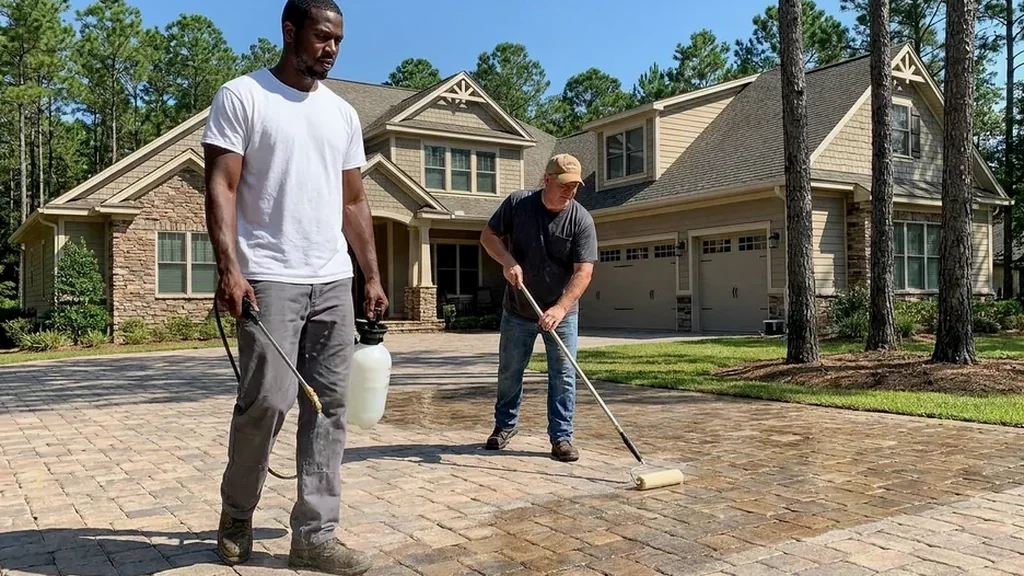
How does a paver sealing job work in San Jose?
Look for dips, drift and the old product
Before any water is used, the contractor measures each area so the estimate states the square feet, then walks your pavers and looks for sunken or lifted sections and for gaps where pavers have drifted apart. Those get repaired first, since sealing would lock them in. The contractor also asks about the old sealer, because water-based and solvent-based sealers do not mix. Tell the contractor if a gate, an HOA or a historic review applies to your address.
Wash off the green and the brown
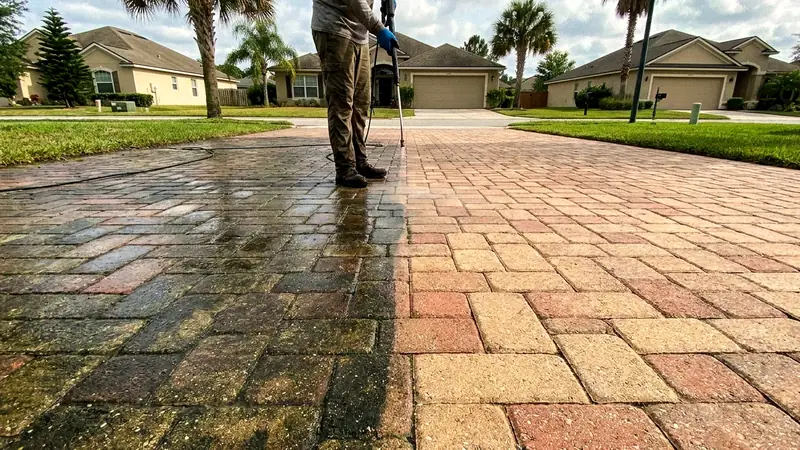
The wash lifts green algae from shady spots and brown leaf stains from under the oaks. Pressure and cleaner are chosen with the surface in mind, so a courtyard beside stucco or an old wall is treated gently. If your entry uses brick or stone, ask the contractor to name the cleaner and the pressure before the wash. Because prep is slow work, this step takes the most time.
Fill the joints with fresh sand
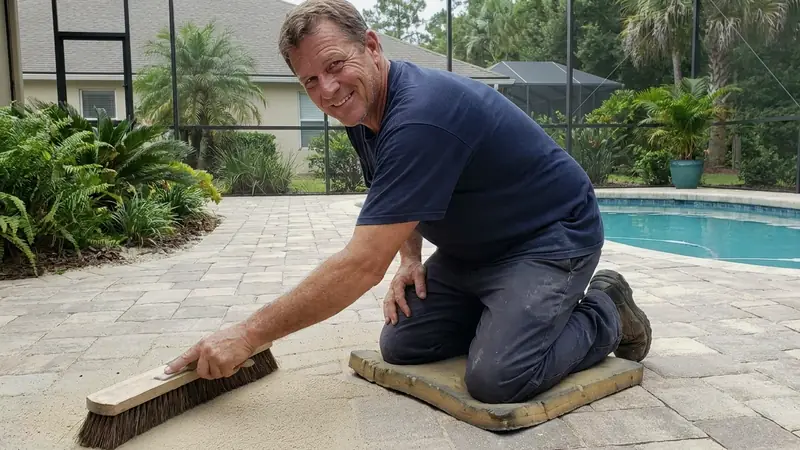
The wash pulls out joint sand, so new sand goes in before sealing. Full joints keep weeds and ants out, while a coat laid over empty joints traps the gaps. The contractor sweeps the sand in and sweeps the surface clean. The edge where pavers meet lawn gets a look too, since gaps there let sand escape. Walkways that had thin joints at the start are the ones to watch, and the contractor will point them out.
Give shaded pavers time to dry
Only a dry surface can take sealer. Under San Jose's big oaks, near Goodbys Creek or the river, a patio can stay damp long after a sunny driveway has dried, and the water table can stay high for days after heavy rain. A coat over damp pavers can turn white. The contractor waits, even if that moves the date, and tells you why. A short delay is better than a white, cloudy finish that has to be stripped.
Seal and keep traffic off
The sealer is sprayed on and then back-rolled into the joints. Wet look brings deeper color, while matte leaves the pavers looking natural. Walking is usually fine in a few hours, and cars wait about a day. Quotes run two to five years between coats, so ask where your lot falls, since shade and tires differ from lot to lot. Ask for the product name, the finish and the date in writing, which makes the next coat easier to plan. Keep the product name the contractor gives you, since it settles the question for the next owner or the next coat.
Complete paver services in San Jose
A San Jose job moves from wash to sand to a dry wait, then the sealer, and each stage is done before the next begins. The wash removes green growth and leaf stains, and the joints are refilled with new sand. Sealer is last, once the surface is dry. To ask how long each stage runs on your lot, call (904) 849-6284.
Driveways take tires and the shade of street oaks. Backyard patios and pool decks near the river take sun and water. Front walks under big branches go green first, and they dry last. Tell the contractor what you have, and how big each area is, when you ask for your free estimate.
Sealer choice starts with the old coat, since the two sealer bases do not mix. After that comes the look: wet look for deeper color, matte for a natural finish. A film that sits on top is common on driveways, while a penetrating product soaks in. Call (904) 849-6284 to talk through your pavers.
Summer storms hit San Jose hard from May to September, while the cooler months are drier. A shaded patio can stay wet for days after a storm, so dates move. A Jacksonville cost guide names fall, after hurricane season, as a good time to seal. For a date that fits your yard, ask for your free estimate.
Questions to ask before you hire
- Can you get the white, chalky bloom off my pavers before you seal them?
- If ants dig sand out of the joints later, is that something you would come back for?
- What should I move off the driveway and patio before you arrive?
- Is your liability insurance current, and may I call the insurer to confirm it?
- What will your estimate list, line by line, so I can compare it with other quotes?
- Is the joint sand you use the kind that hardens, and how long must it stay dry?
- How many dry hours do you need before and after the sealer goes on?
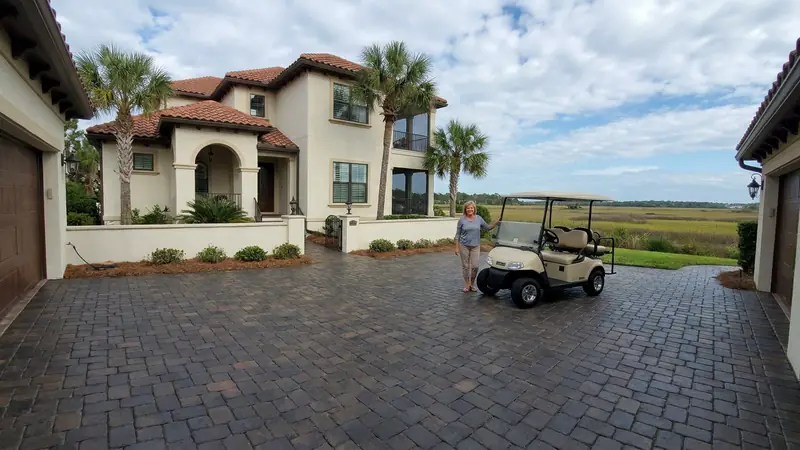
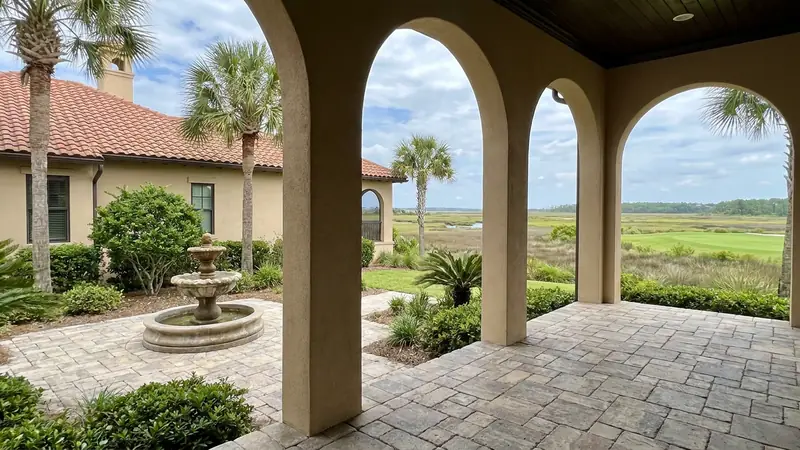
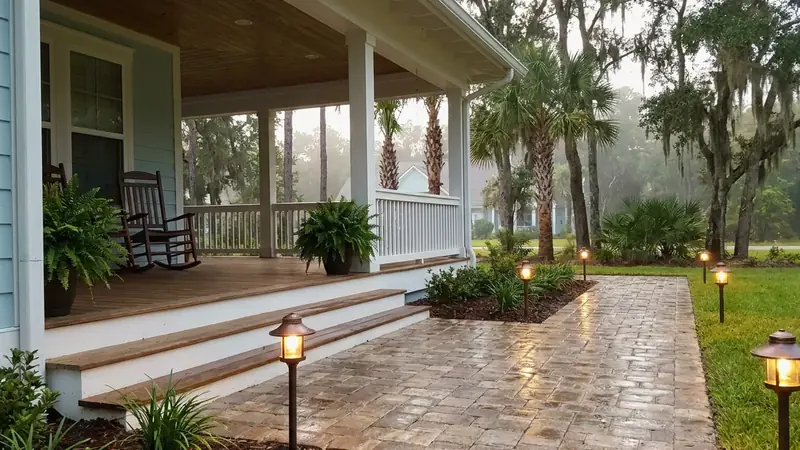
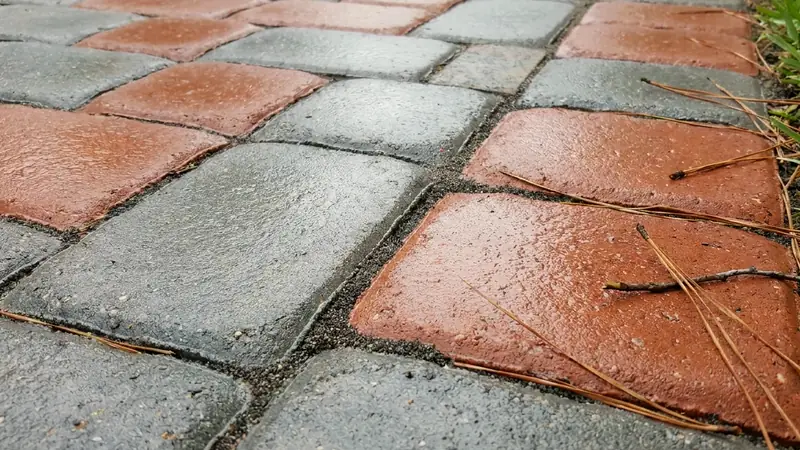
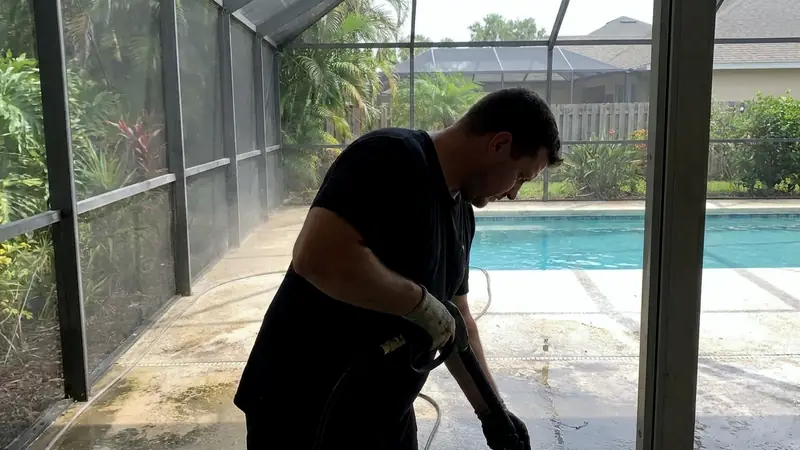
What do sealed pavers look like around San Jose?
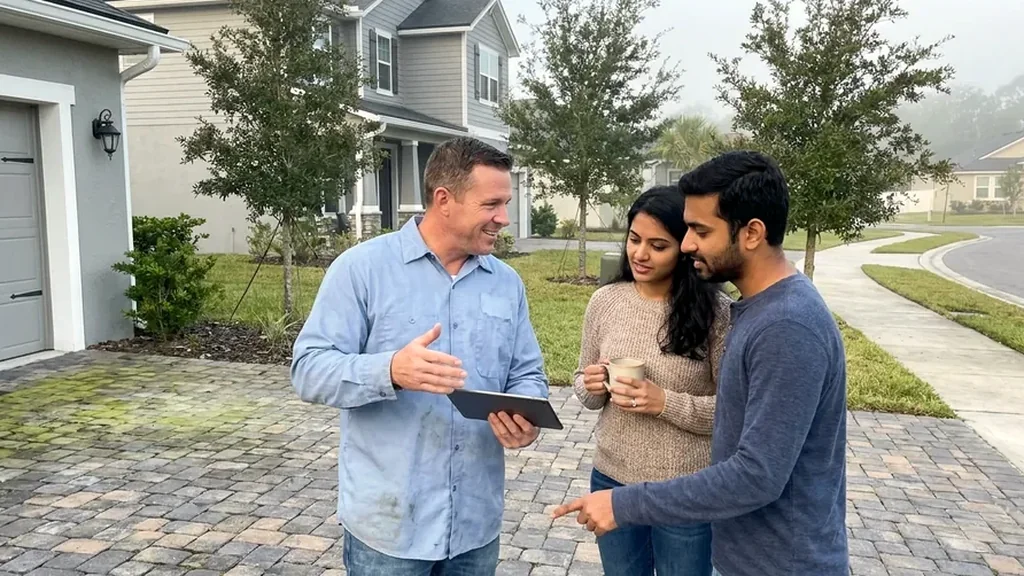
Why local matters in San Jose
A San Jose contractor knows the estate streets and the ranch streets are different jobs. The 1925 Estates plan named streets for Spanish cities, while postwar lots filled in after 1947. That means pavers and bases of different ages. Call (904) 849-6284 to speak with a contractor who works in San Jose.
Gates and reviews are part of local work too. Epping Forest is gated, other communities are planned developments, and historic addresses may need a Certificate of Appropriateness. A local contractor asks about all three before booking. Ask what applies to you, and ask for your free estimate.
Shade is the other local fact. San Jose's streets sit under large oaks with draping moss, and Goodbys Creek and the St. Johns River run along its edges. A contractor who works here waits for a dry surface and a dry forecast. To plan around your yard and your trees, ask for your free estimate.
Which San Jose landmarks can I use to explain where I live?
San Jose Boulevard is the spine. The Bolles School opened in 1933 in the old San Jose Hotel, which opened on New Year's Day 1926, and Bolles Hall still occupies it. The San Jose Country Club course, laid out by Donald Ross, fills a triangle off San Jose Boulevard and Via de la Reina. If you live near the school or the course, ask for your free estimate.
Goodbys Creek roughly divides San Jose from Mandarin, and Goodbys Creek Preserve is at 9145 San Jose Boulevard. Alejandro Garces Camp Tomahawk Park, at 8419 San Ardo Road, sits between the San Jose and Beauclerc areas with mature oak, pine and maple trees. San Jose runs from University Boulevard south to San Clerc Road along the river. Near any of these, call (904) 849-6284.
Frequently Asked Questions
Why is paver sealing so expensive in San Jose?
Prep takes most of the labor, and the sealer is the smaller part. Published prices start at $1.75 per square foot and top out at $3.25 for the wash, sand and sealer together. Smaller San Jose yards can cost more per foot.
What is a good water-based paver sealer for a San Jose driveway?
The product matters less than what is already on the pavers. The contractor identifies the old coat first, because a water-based sealer will not go over a solvent-based one. Ask for the product name, and whether it is a film or a penetrating type, before you agree to the work.
How long does paver sealing last in Florida, and in San Jose?
Expect two to five years between coats. A Jacksonville company says water that beads means the sealer is working, and water that soaks in and darkens the paver means it is done. Heavy shade and daily tires are reasons to check sooner.
How much does it cost to re-sand and seal pavers in San Jose?
Re-sanding sits inside the published $1.75 to $3.25 per square foot for a clean, sand and seal. Failed sealer that has to be stripped first costs more. The free estimate states the area and the total so you can compare.
Do I need approval before sealing pavers in San Jose?
It depends on your address. A historic district or landmark needs a Certificate of Appropriateness for exterior work, and driveways are named as an example. An HOA may also review the appearance of changes. Check the city's Land Development Map and your association rules first.
Will oak shade make my San Jose pavers go green?
It can. Algae grows in shaded places where moisture lingers, such as under trees or patio roofs. A wash removes it, and one Jacksonville company says sealing makes the next cleaning easier. A sunny driveway will stay clean longer than a shaded walk.
Can sunken pavers be fixed before sealing in San Jose?
Yes, and they should be. A weak or poorly compacted base is a leading cause of sinking, and sealing locks in a dip as it is. Low spots are reset first, and then the wash, sand and sealer follow. Roots from big oaks can lift a walk too, and the same reset applies.
How soon can I walk on my San Jose pavers after sealing?
Allow a few hours before anyone steps on it and roughly a day before cars come back. The exact times depend on the product, so ask before the day. Keep sprinklers and pets off the surface until then, and move cars only when told it is safe.
Can I seal new pavers right away in San Jose?
Usually not. A St. Augustine area company says new pavers should sit 60 to 90 days first, so trapped moisture can leave and any white haze can show. Tell the contractor when yours were laid.
Will sealing keep weeds out of my San Jose paver joints?
It helps. A landscape trade article says cleaning and sealing discourage ants and weed growth in the joints, and a Jacksonville company warns that weeds return when a coat goes over empty joints. Full joints and a fresh coat work together, so the sand goes in first.
Does a gate change how a San Jose paver job is booked?
It can. Gated communities may restrict contractor hours and vehicle access, according to a Southside paver page. Mention the gate, any guard house and who is on the visitor list when you request the estimate, so the day goes as planned.
Nearby areas we serve
Ready for a Free Estimate in San Jose?
Call (904) 849-6284 and tell us about your pavers.
Free, no obligation